 Kurashi
Furoshiki: the cloth that replaces wrapping paper
This page contains affiliate links to Amazon. If you buy through them, I may earn a small commission at no extra cost to you. More
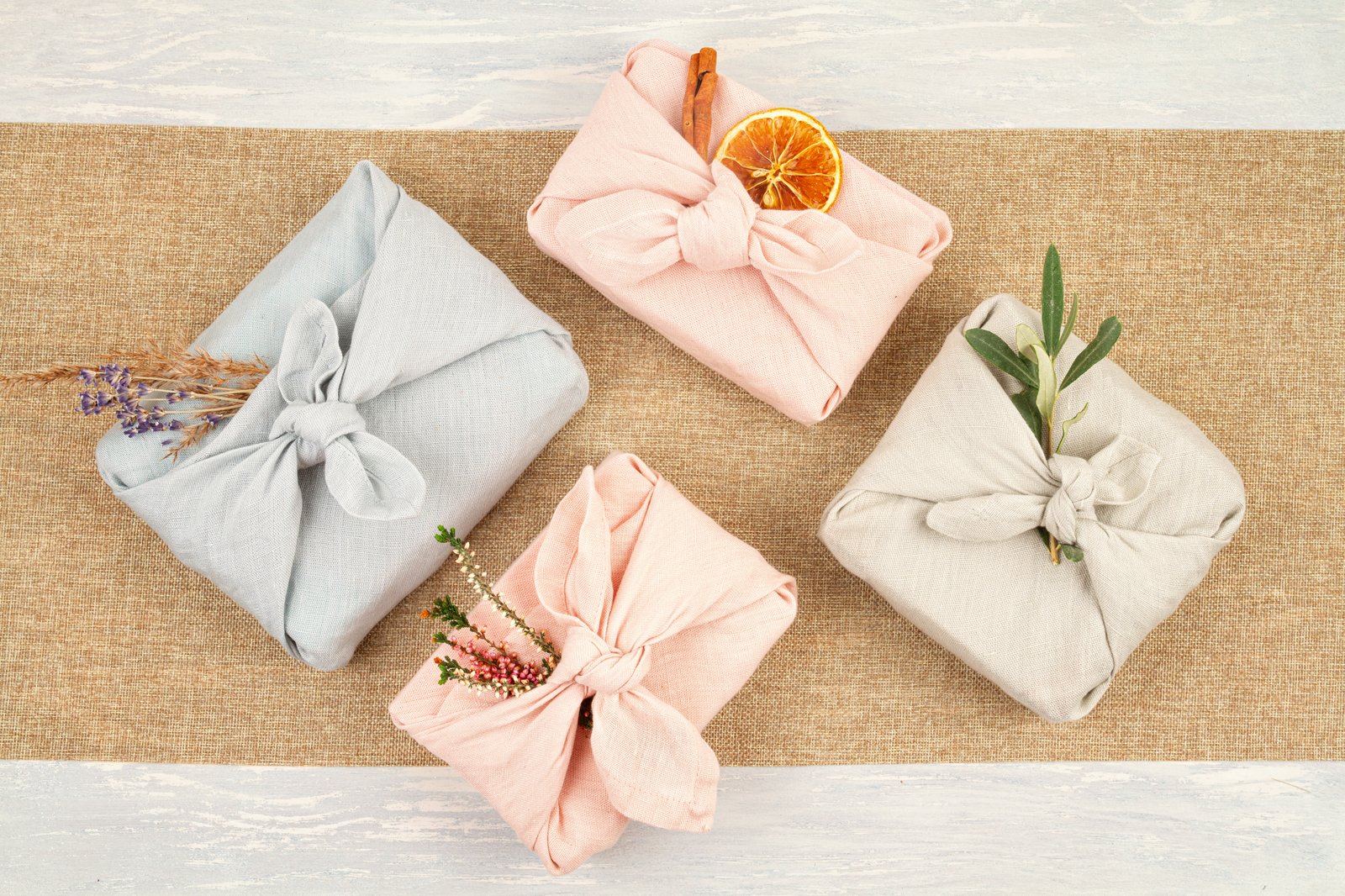
A furoshiki is just a square of cloth. Japanese households have used it for centuries to wrap and carry things — a bento box, a bottle, a gift — long before paper gift bags existed. It's easy to picture it as something for special occasions, or for someone in a kimono. It isn't. It's just fabric, and it's having a bit of a comeback in Japan right now, for a very modern reason.
Wrap a gift in paper, and the paper is trash by the end of the day. Wrap it in a furoshiki, and the cloth goes home with whoever received it — to be used again, for something else, indefinitely. No tape, nothing torn open and thrown away.
More jobs than "gift wrap"
Once there's one in the house, the uses tend to show up on their own:
- Wrapping a bottle to carry to someone's house, instead of a paper bag.
- Covering a dish left on the counter, instead of plastic wrap.
- A cover for a tissue box, so it doesn't just sit there as plastic packaging on a shelf.
- Wrapping a lunch box, the original job it was made for.
- A gift wrap that doesn't get thrown away — the classic use, and still the best one.
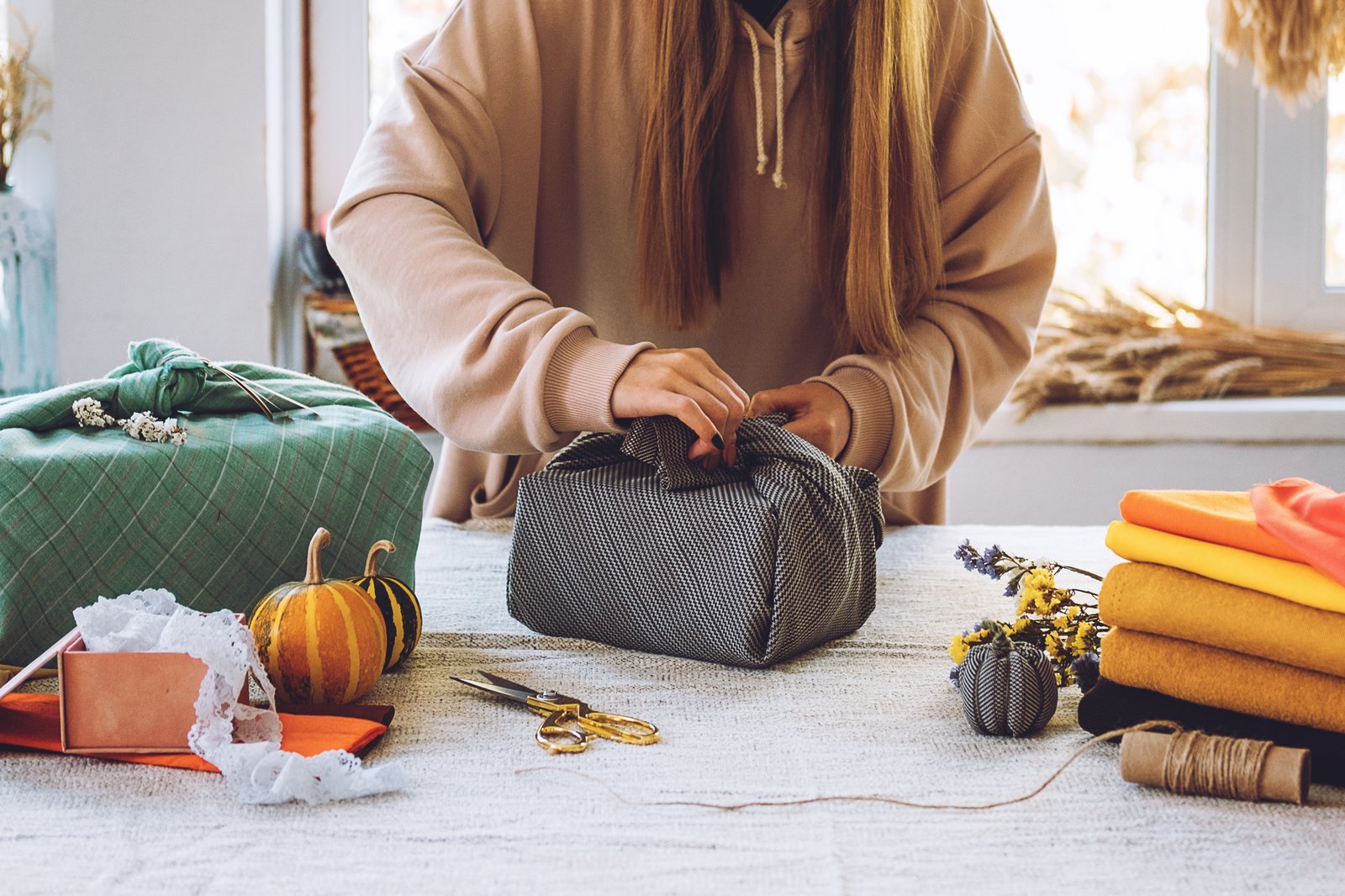
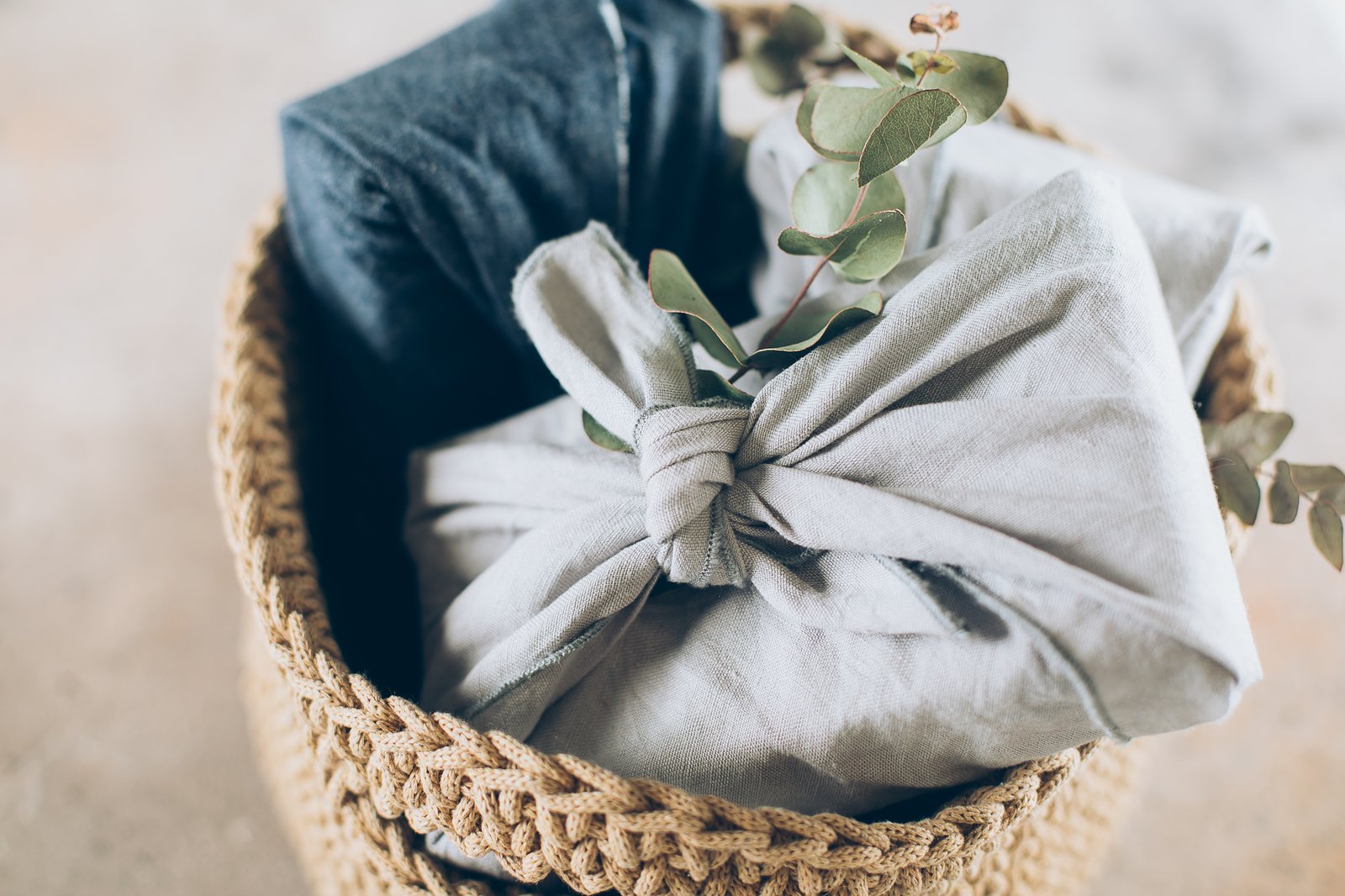
There's more than one way to fold and tie one — a simple wrap-and-knot for a box, a twist for a bottle, and a version that turns into an actual bag with handles. The square itself is the only thing you actually need to buy; the rest is just folding.
Turning it into a bag
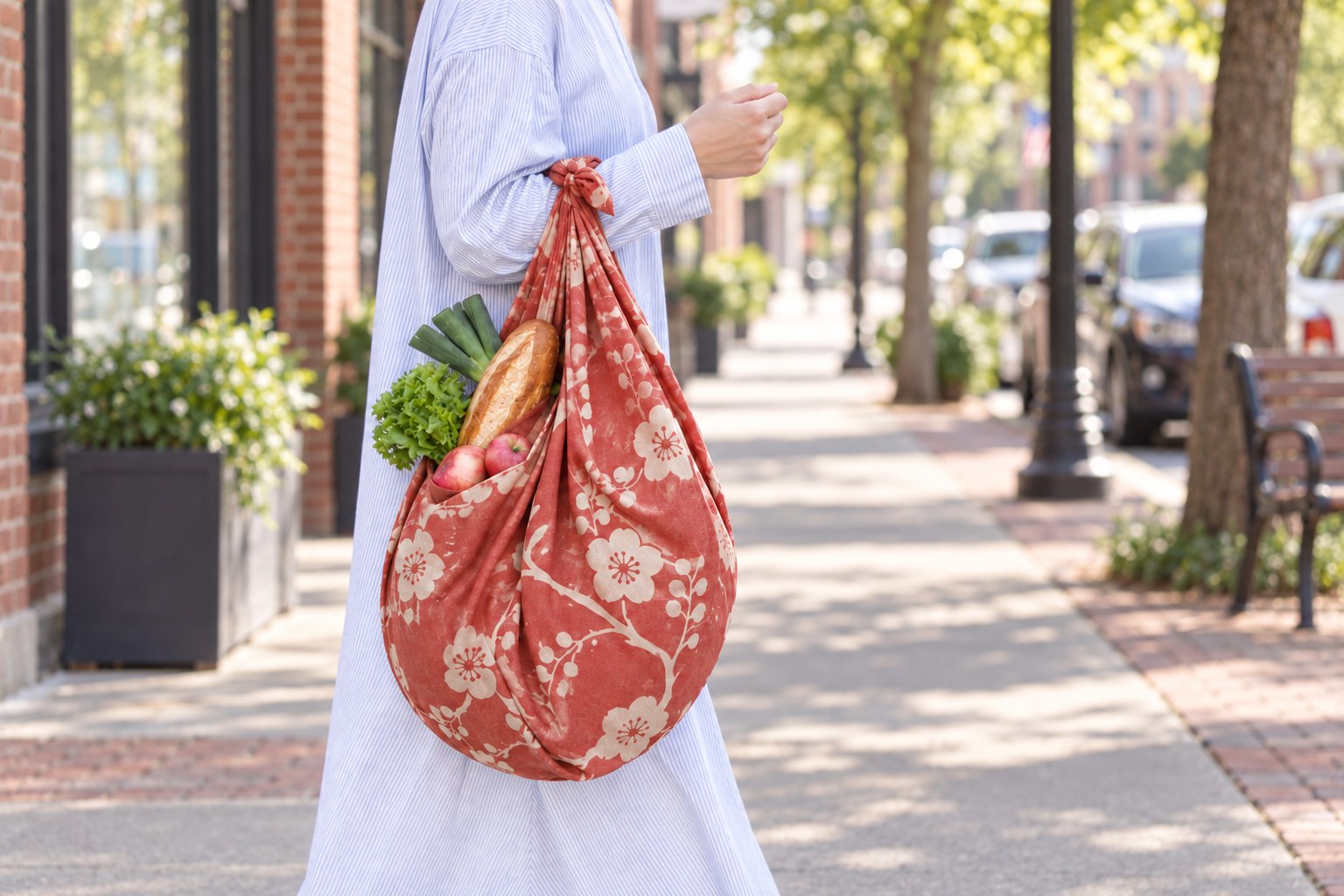
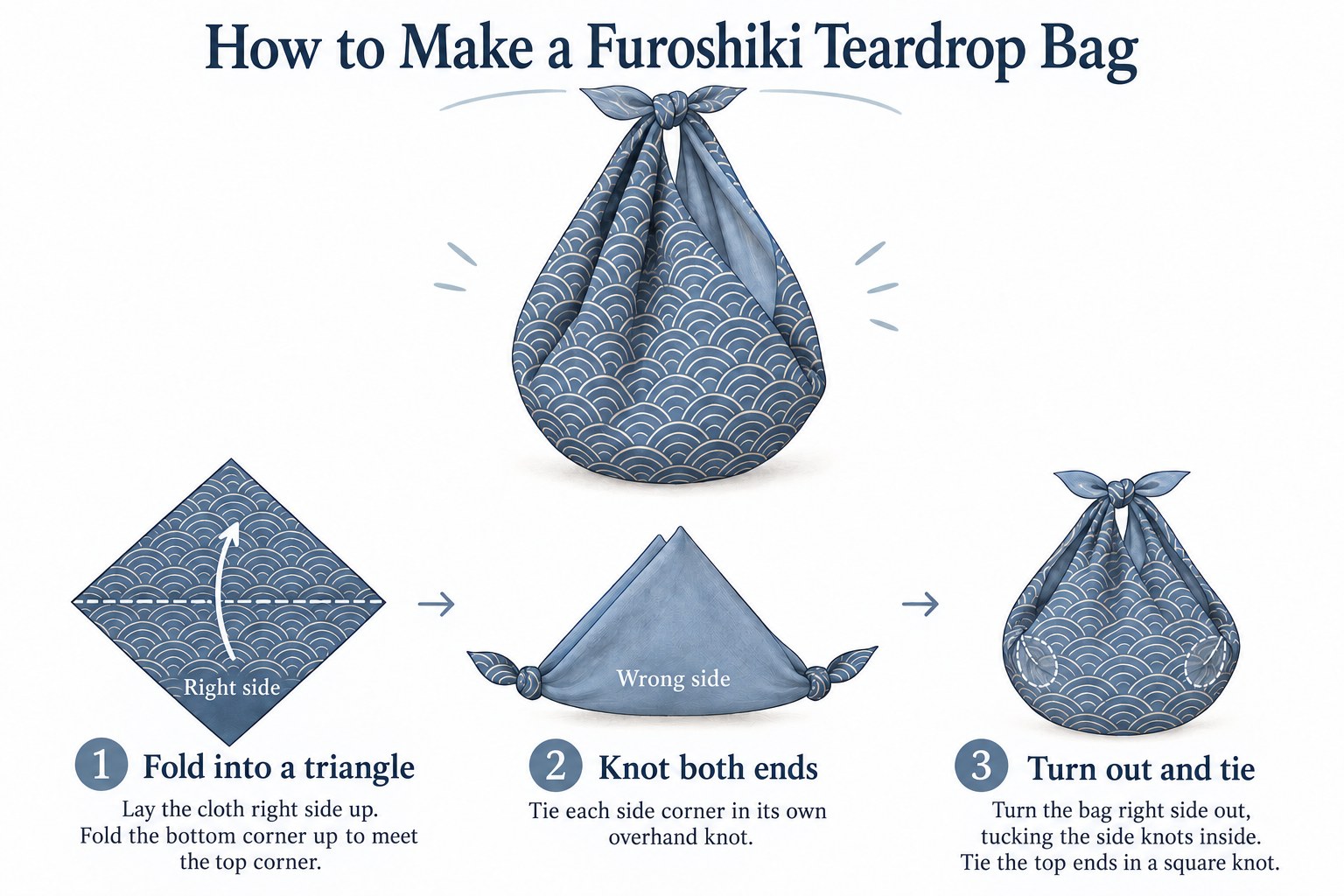
This is the version that gets the most use once you know it, sometimes called a teardrop bag. Fold the cloth in half diagonally, right side up, so the bottom corner meets the top corner and you're left with a triangle. Tie the two side corners — each one is really two layers of fabric meeting at that point — in its own overhand knot. At this stage the bag is inside out, and the two knots sit on the outside.
Turn the whole thing right side out, which tucks both of those knots inside and out of sight. What's left sticking up are the two top ends of the triangle; tie those together in a square knot, and that knot becomes the handle.
Three folds, and it's a bag.
A cloth for everyday, not just for kimono
It's tempting to think of furoshiki as part of a kimono outfit, something that only makes sense with the rest of the traditional wardrobe. In practice, most of what a furoshiki actually does — wrapping a bottle, covering a dish — happens in completely ordinary clothes, in an ordinary kitchen. The cloth doesn't ask for the rest of the outfit.
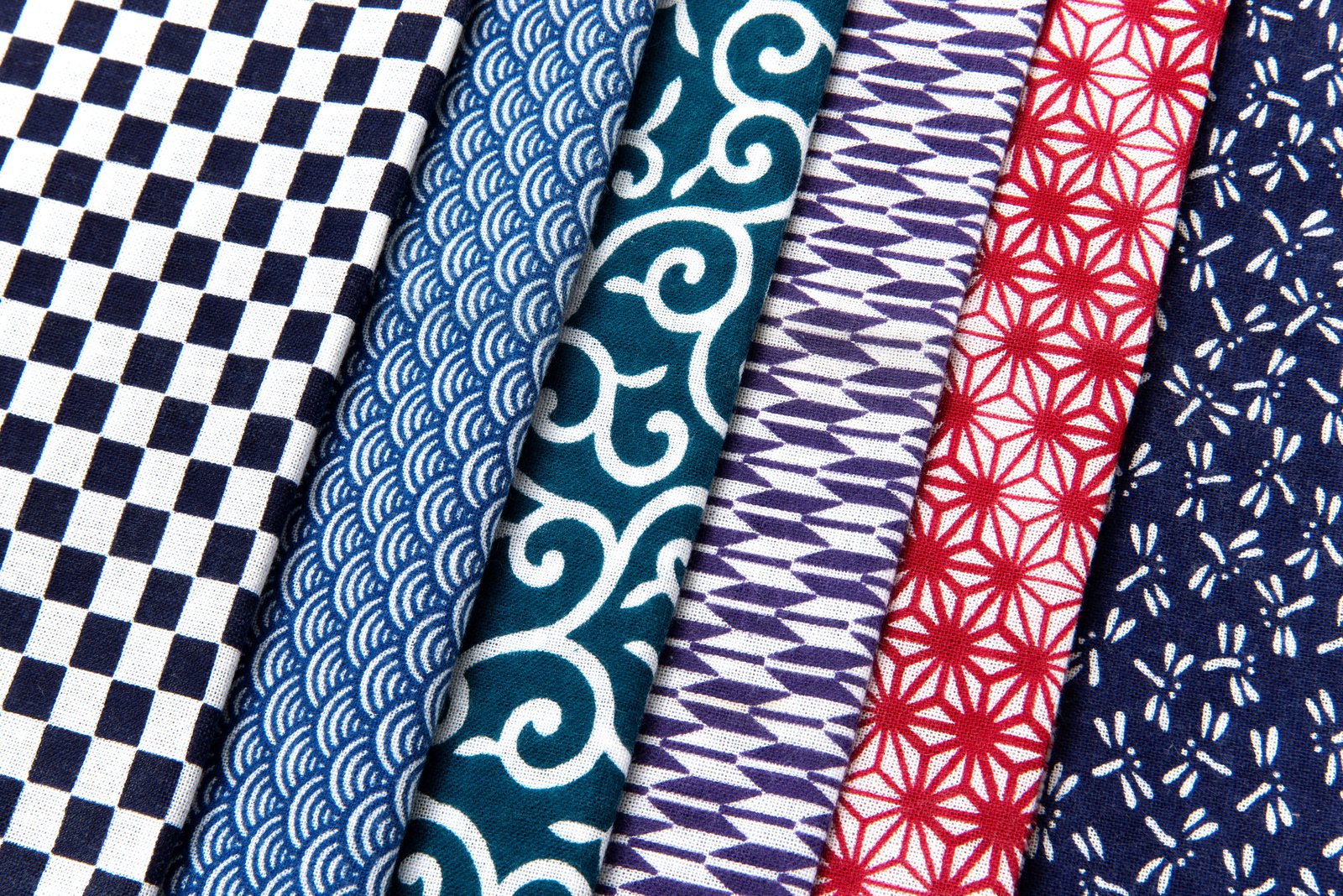
A few to start with
These are all reversible — a different color or pattern on each side — so each one is really two cloths depending on which way you fold it.
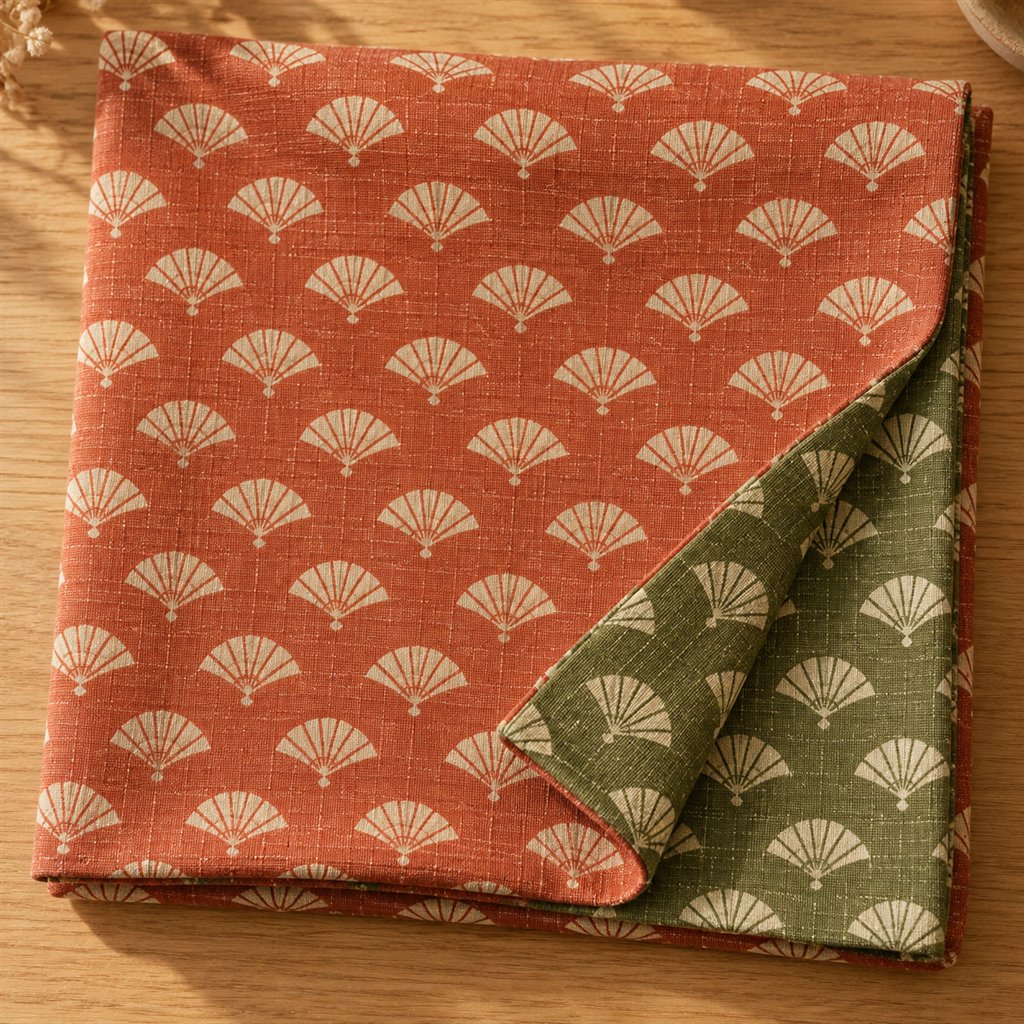
Reversible Furoshiki, Purple & Blue (IPPINKA)
Same size and material, in a cooler color pairing.
- Size: 18.9 × 18.9 in
- Material: 100% cotton
- Made in Japan
- I haven't tried this one.
Weeping Cherry Tree Furoshiki, Pink & Green
A cherry blossom design, for anyone who wants the pattern itself to be the point. The shop doesn't state a country of manufacture for this one, but the design is a classic Japanese motif.
- Size: 18.9 × 18.9 in
- Material: 100% cotton
- I haven't tried this one.
Reversible Furoshiki, Set of 3 (IPPINKA)
Pink/green, purple/blue, and blue/red, in one set — six color combinations total once you count both reversible sides. An easy way to always have one on hand for whatever's being wrapped.
- Made in Japan
- I haven't tried this one.
How I'd choose
Size. 18.9 in (about 48 cm) square is the common everyday size — enough for a bottle, a lunch box, or a mid-size gift. Bigger cloths exist for bigger jobs.
One is enough to start. It's a single square of fabric, not a set of tools. Once it earns a place in a drawer, a second one tends to follow on its own.