
This page contains affiliate links to Amazon. If you buy through them, I may earn a small commission at no extra cost to you. More
You don't need a Japanese restaurant to enjoy sake the Japanese way. A small bottle, a couple of tiny cups, and whatever is in your fridge. That's how most of us drink sake at home, and it's just as easy to do at yours.
Here's what a sake evening looks like in a Japanese home, the few manners worth knowing, and what you need to set one up yourself.
The everyday evening drink
Almost every Japanese home has a few ochoko, small sake cups, somewhere in the cupboard.
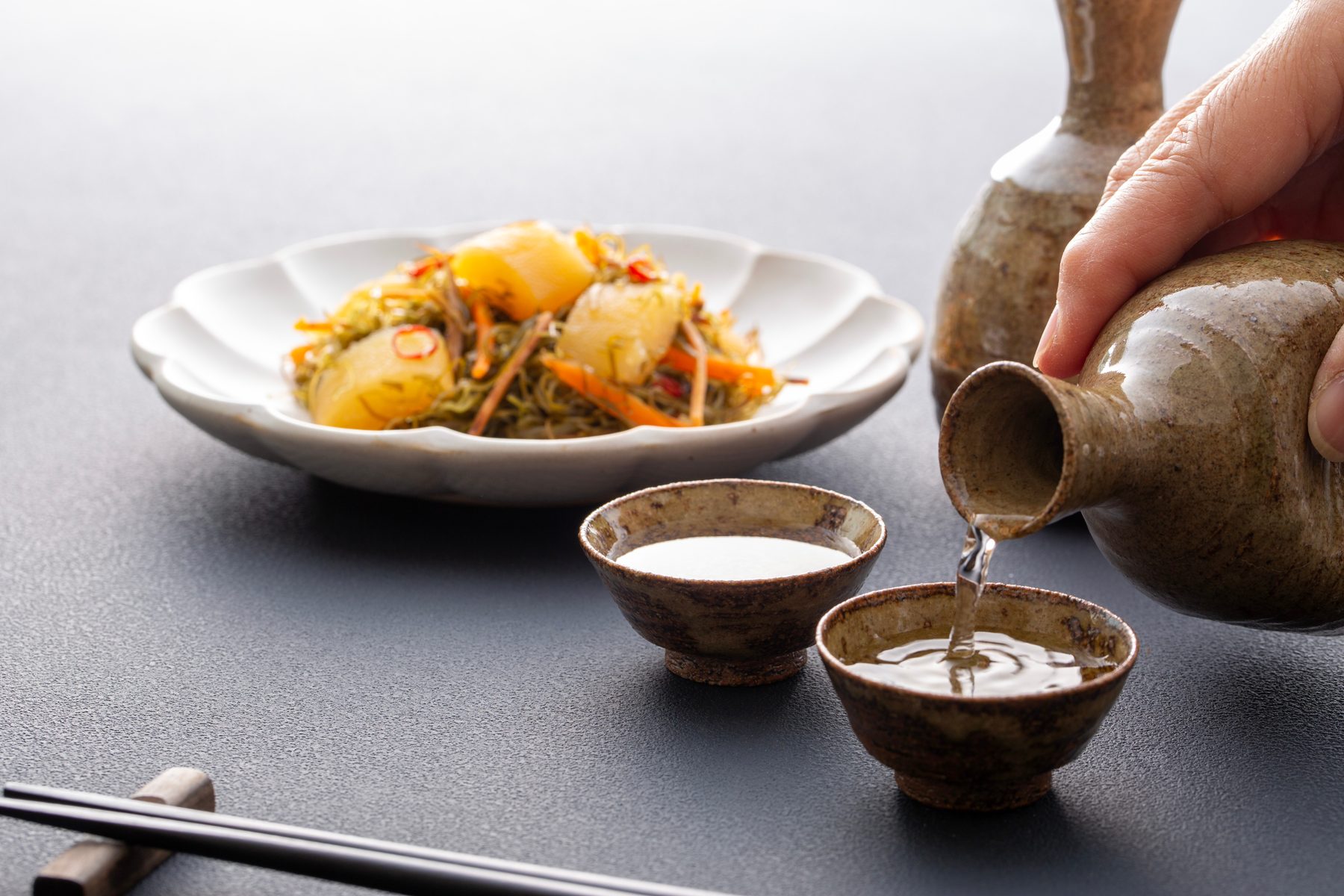
The everyday way to drink sake at home is simple. Whatever is left in the fridge, or a quick small dish like cold tofu (hiyayakko) or edamame, and a small bottle of sake. One go, about 180 ml, in a tokkuri, or a small glass. Nothing fancy. It's a way to wind down at the end of the day. We call it banshaku, the evening drink.
When sake comes out
- With food. Not only with sashimi or grilled fish. We drink it with meat and Western dishes too, choosing a sake that goes with the meal.
- On special days. New Year, weddings, cherry-blossom viewing. Sake is also offered to the gods at shrines (omiki), so it belongs at celebrations.
- To relax. After work, at home, slowly.
How it's enjoyed
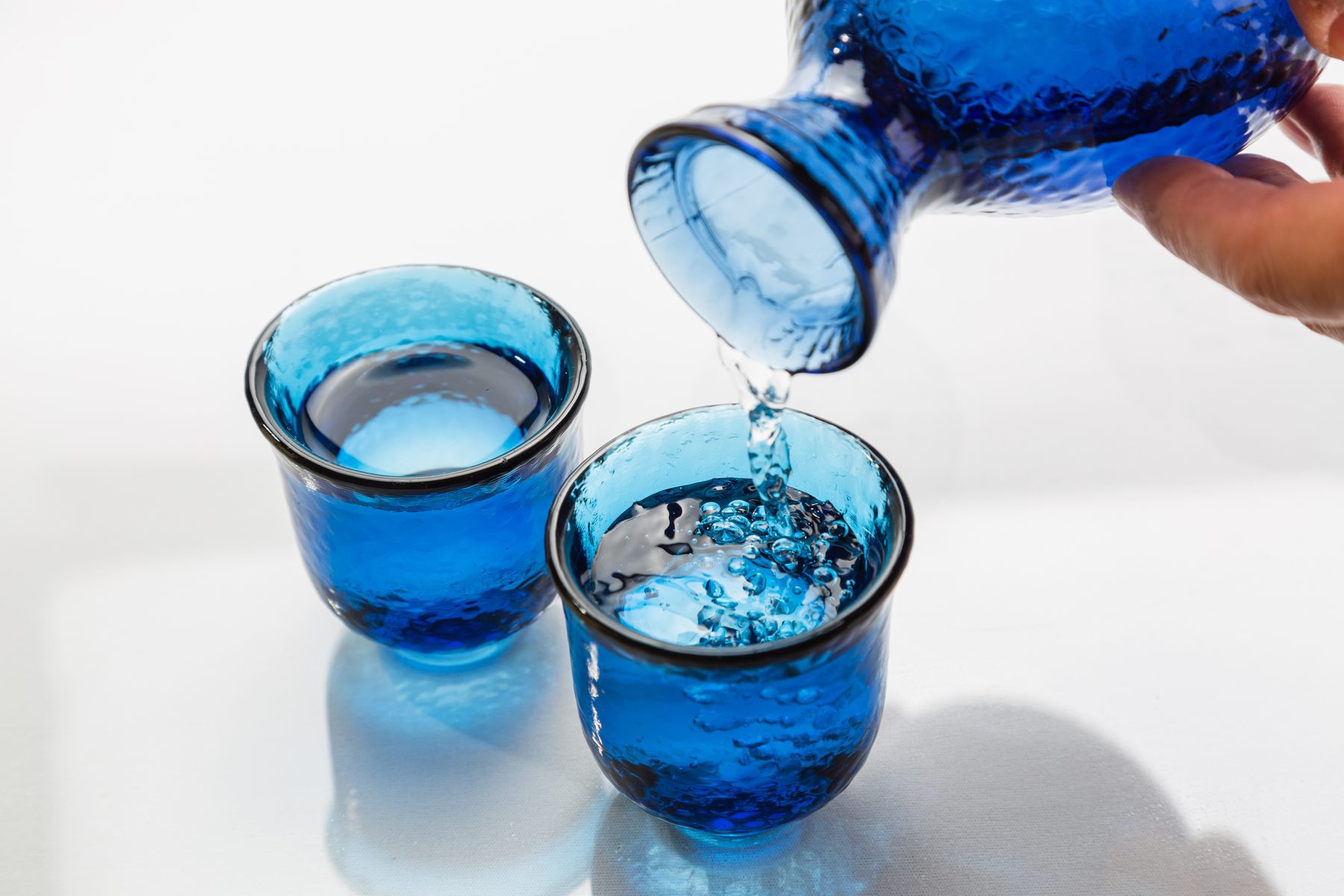
- Change the temperature. Sake is drunk chilled (reishu), or warmed, from body temperature to hot (kanzake). It depends on the sake and the season.
- Drink water alongside. We keep a glass of water next to the sake and sip it in between. It's called yawaragi-mizu, "softening water." It refreshes your mouth and helps you avoid feeling bad the next day.
- Sip, don't shoot. The cups are small for a reason. You take small sips while you eat.
Pouring for each other (and when you don't have to)
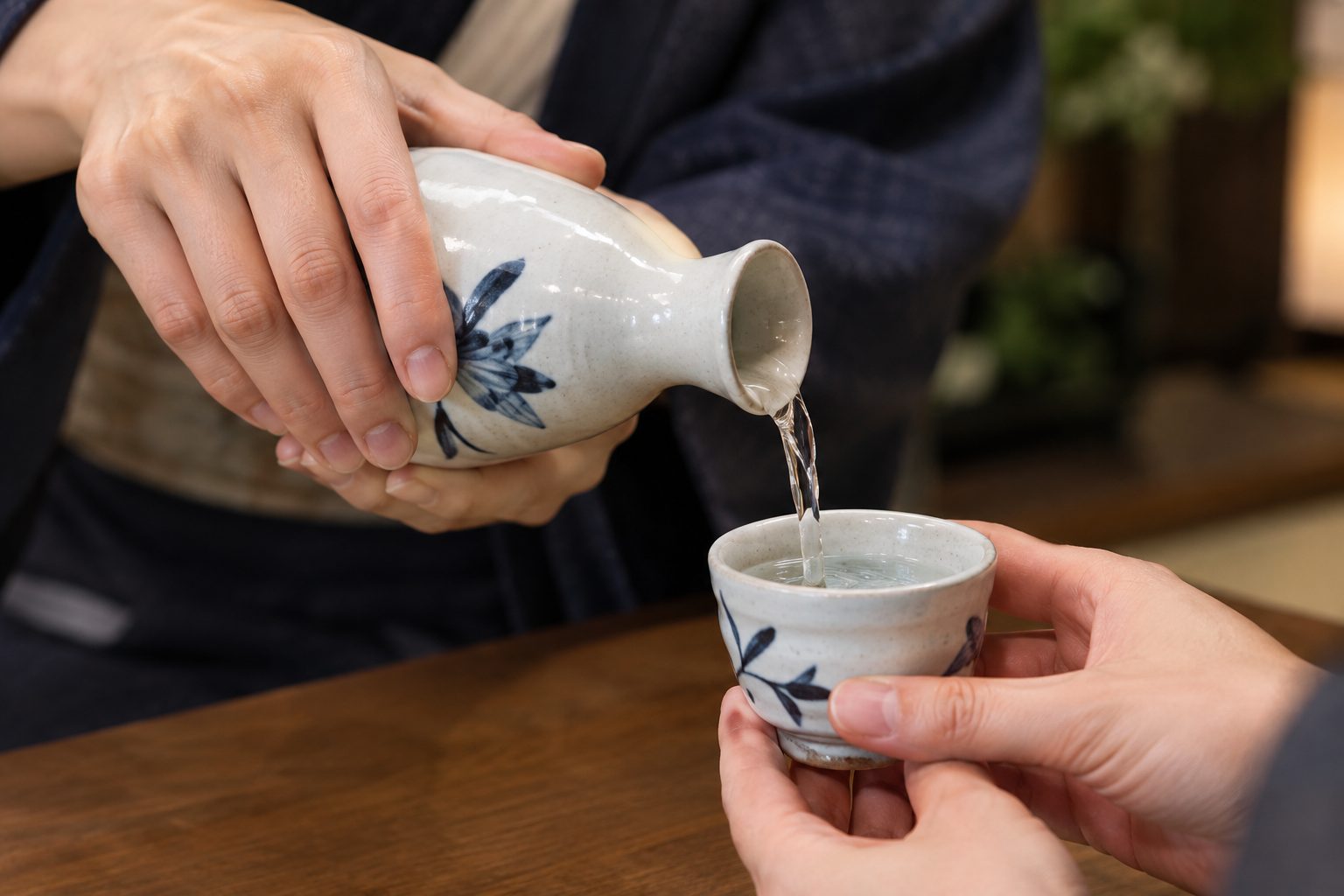
This is the part worth trying the next time you have friends over. When several people drink together, we often pour for each other. This is called oshaku. It's less a strict rule than a way of connecting: you pour for the person next to you, and they pour for you.
It isn't absolute, either. At home, or with friends and family, it's perfectly fine to pour your own. That's called tejaku. If you do pour for someone, a few small manners go with it:
- Don't pour into a cup sitting on the table. This is called oki-tsugi and it's considered rude. Wait for the other person to pick up their cup, then pour.
- Hold the tokkuri with both hands. Your dominant hand holds it from above, and the other hand lightly supports it from below.
- Keep your palm turned sideways. Try not to show the palm of your hand while you pour.
Three sake sets
To set up a sake evening at home, all you need is a tokkuri and a few cups. A set of two cups suits a quiet night for one or two people. A set with four cups works better if you have guests. All three are listed as made in Japan.
Mino Ware Sake Set, Black Tenmoku
Picked for a dark, quiet glaze
A tokkuri and two cups in tenmoku, a traditional dark glaze.
- 1 tokkuri, 8.8 fl oz (about 260 ml)
- 2 cups, 1.35 fl oz each
- Ceramic, listed as Mino ware, made in Japan
- I haven't tried this one.
Sake Set, Black Kuro Oribe, 5 Pieces (Product of Gifu Japan)
Picked for sharing with guests
One bottle and four cups, so everyone at the table can pour for each other.
- 1 tokkuri and 4 cups
- Ceramic, listed as made in Japan (Gifu)
- I haven't tried this one.
NAGOMI Mino Ware Sake Set, Beige Shark Bokashi
Picked for a lighter look
A tokkuri and two cups in soft beige. Bokashi means the color fades gradually from one tone to another.
- 1 tokkuri and 2 cups
- Listed as Mino ware, made in Japan
- I haven't tried this one.
The masu: sake in a wooden box
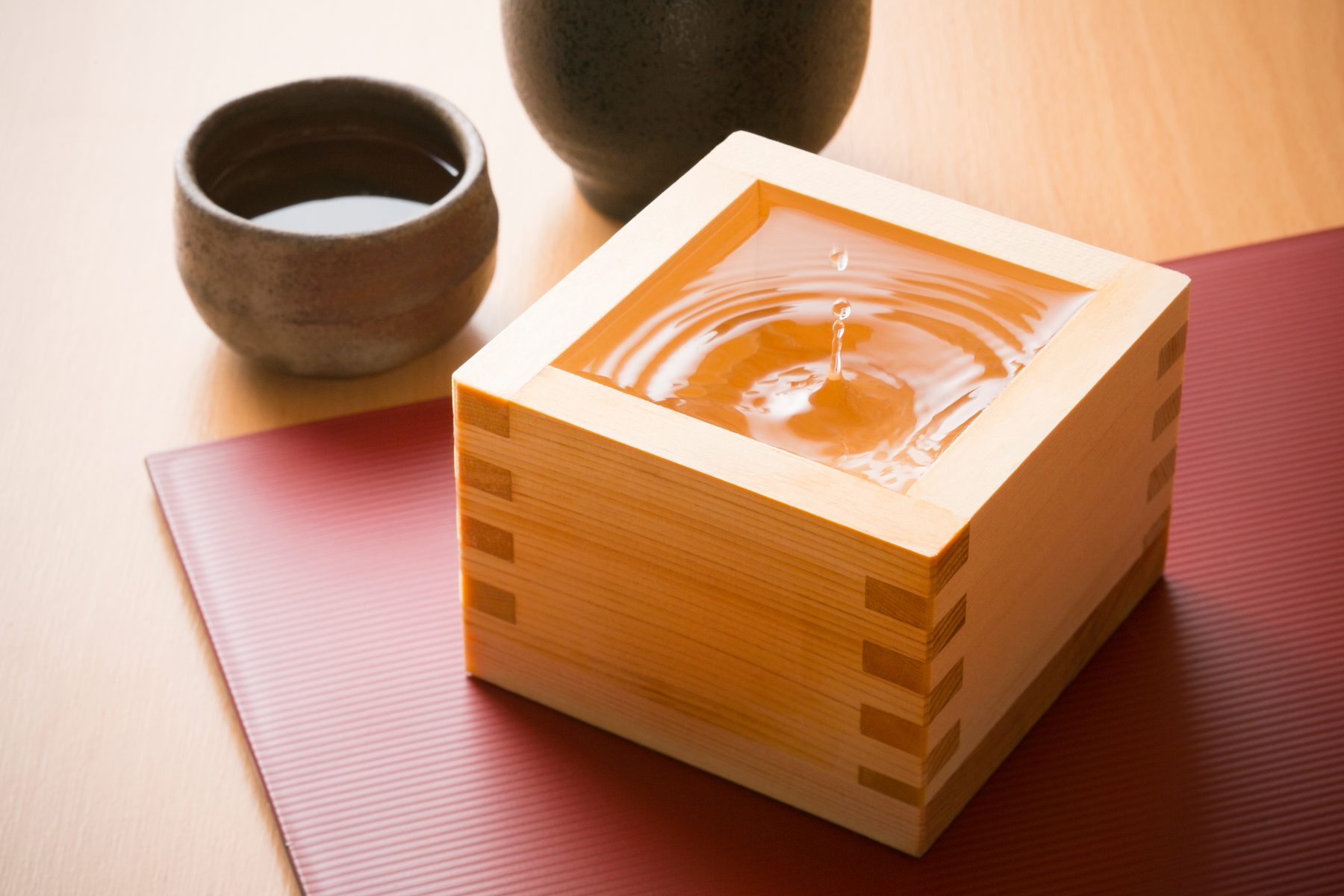
Sake poured into a masu, a small square wooden box, is called masuzake. It tastes different from sake in a cup or a glass.
The masu started as a measuring cup for rice, soy sauce and sake. It is usually made of cedar or hinoki cypress, woods closely tied to Shinto shrines. The word masu also sounds like "to increase," so it's seen as lucky. And because it's built from pieces of wood fitted together, people say it stands for many people bringing their hearts together. That's why you see masu at weddings and at New Year.
The best part is the smell. The scent of the wood moves into the sake and gives it a soft, fresh aroma you don't get from a glass.
How to drink from a masu
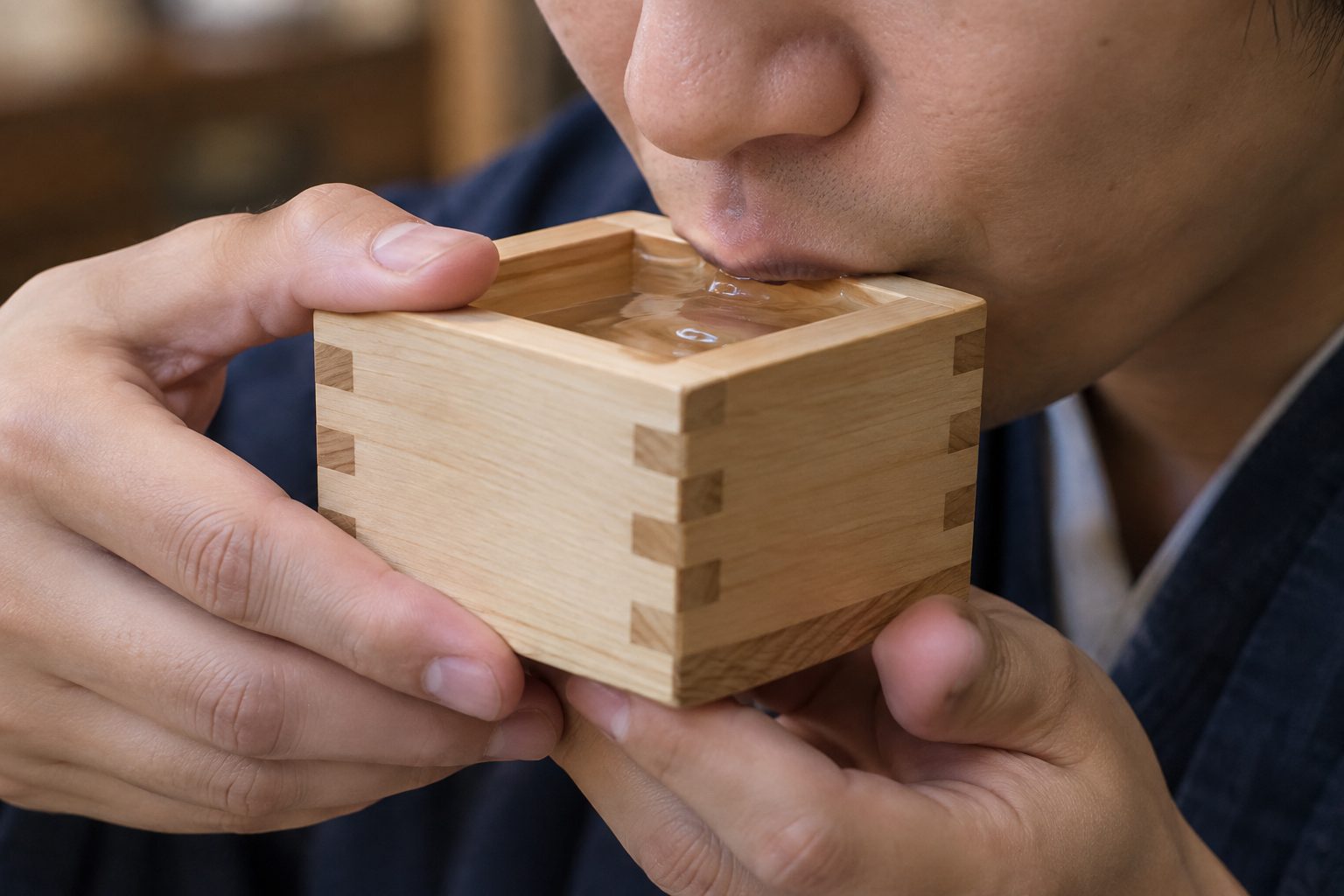
Drinking from a square box is harder than it looks, even for many Japanese people. Here's how to hold it, and three ways to drink.
How to hold it: support the bottom with your fingers, rest your thumb on the rim, and lightly support the side with your other hand. Then bring it to your mouth and sip.
Where you put your lips changes the taste:
- The flat part of the rim. This is the proper way to drink from a masu. The sake touches the tip of your tongue gently, so you taste the sake's natural sweetness and aroma.
- A corner. If the flat side is hard to drink from, a corner is easier, and many people recommend it. The sake runs toward the back of your tongue, which brings out a crisper acidity and a little astringency. At home or on an ordinary evening, drinking from a corner is perfectly fine.
- With salt. Put a little coarse salt on a corner of the masu and lick it as you drink. It's easier to drink from the corner this way, and the salt brings out the umami and sweetness of the sake.
Try all three with the same sake. It's a fun way to taste the difference at home.
How to care for it: to keep the wood's scent, wash it with water only, no dish soap. Wipe it with a cloth, then let it dry completely somewhere with good airflow.
Hinoki Wood Masu, 1 Go (TIKUSAN)
Picked for a celebration, or a gift
A masu made of hinoki cypress, sized to hold one go of sake.
- Capacity: 6.1 fl oz (1 go, about 180 ml)
- Hinoki wood
- Listed as made in Japan
- I haven't tried this one.
Your first sake evening
Get a tokkuri and two cups. Warm the sake or chill it, put out a small dish of something from the fridge and a glass of water, and pour for the person next to you. That's a Japanese evening at home.