 Kurashi
Gotokuji: the Tokyo temple where the lucky cat was born
This page contains affiliate links to Amazon. If you buy through them, I may earn a small commission at no extra cost to you. More
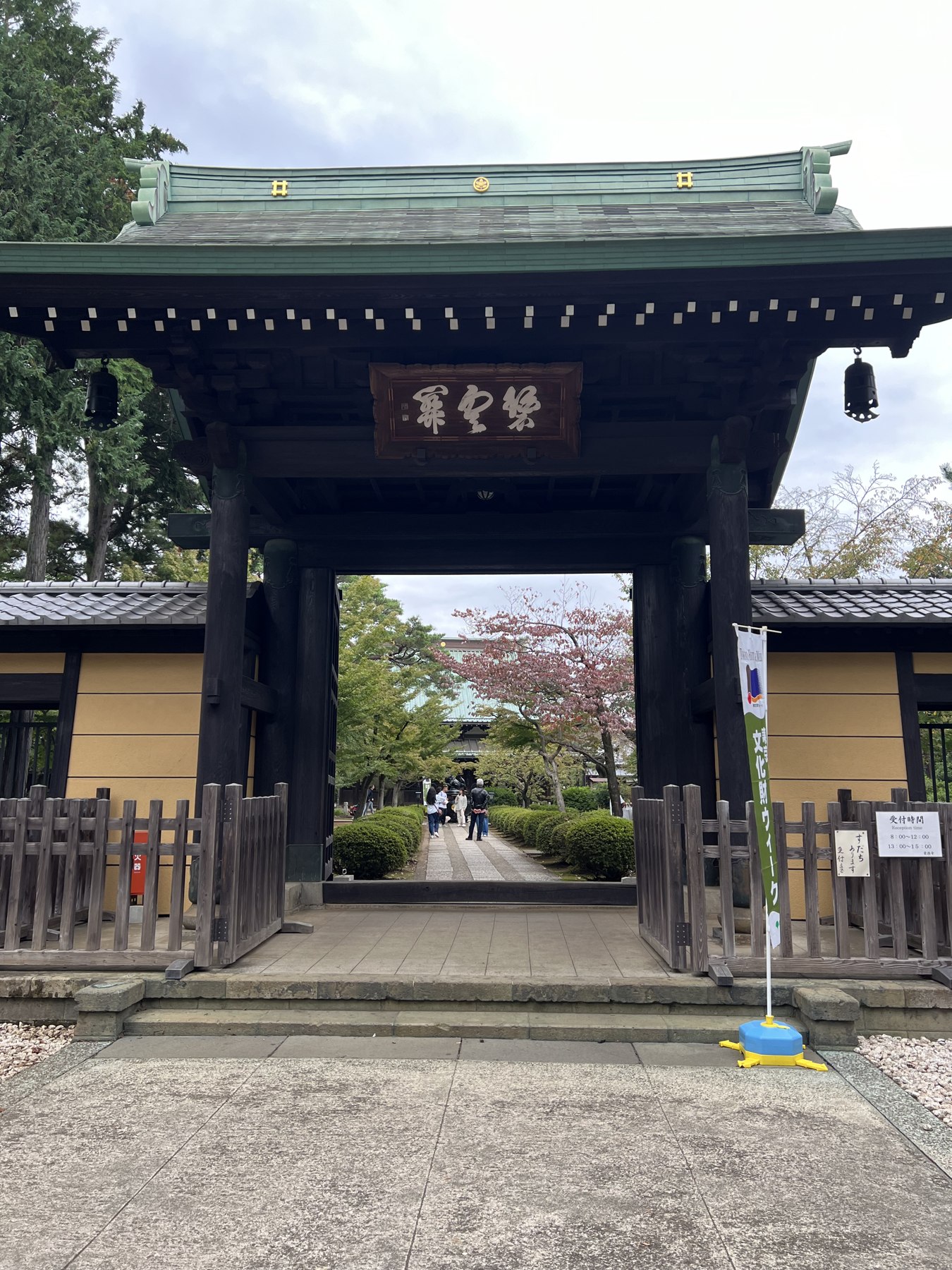
Most people in Japan have seen a maneki-neko, a beckoning cat with one paw raised, sitting by a shop register. Fewer have been to the place it's said to come from. Gotokuji is a quiet Buddhist temple in the Setagaya area of Tokyo, and it happens to be a ten-minute walk from a part of the city I know well — which is how I first ended up there, before I knew the story.
The temple
Gotokuji dates back to the 1480s, though the temple as it stands now took shape in the 1600s. It's not a famous tourist landmark like Senso-ji or Meiji Shrine — it's a working neighborhood temple, with a graveyard, a garden, and (as you're about to see) an enormous number of small ceramic cats. Even on a weekday afternoon it was calm, just a handful of other visitors.
Address: 2-24-7 Gotokuji, Setagaya-ku, Tokyo 154-0021
Nearest station: Gotokuji Station (Odakyu Line) or Miyanosaka Station (Tokyu Setagaya Line), both about a 5–10 minute walk
Grounds: open daily, roughly 6:00–18:00, free to enter
Open in Google Maps →
Why there are so many cats here
The story goes back to the early 1600s. Ii Naotaka, a feudal lord, was out riding near the temple when a sudden storm broke. Passing by the gate, he saw a cat that seemed to be beckoning him inside. He followed it in — and moments later, lightning struck the exact spot where he had been standing. The cat, the story goes, had saved his life.
Naotaka became the temple's patron from then on, funding its rebuilding, and the cat was later enshrined as a fortune-inviting Kannon. Over time, that cat became the model for the maneki-neko sold and displayed everywhere in Japan today. Visitors have been leaving cat figurines at Gotokuji as thank-you offerings ever since — not with any single wish in mind, just as a way of saying thank you for good fortune already received.
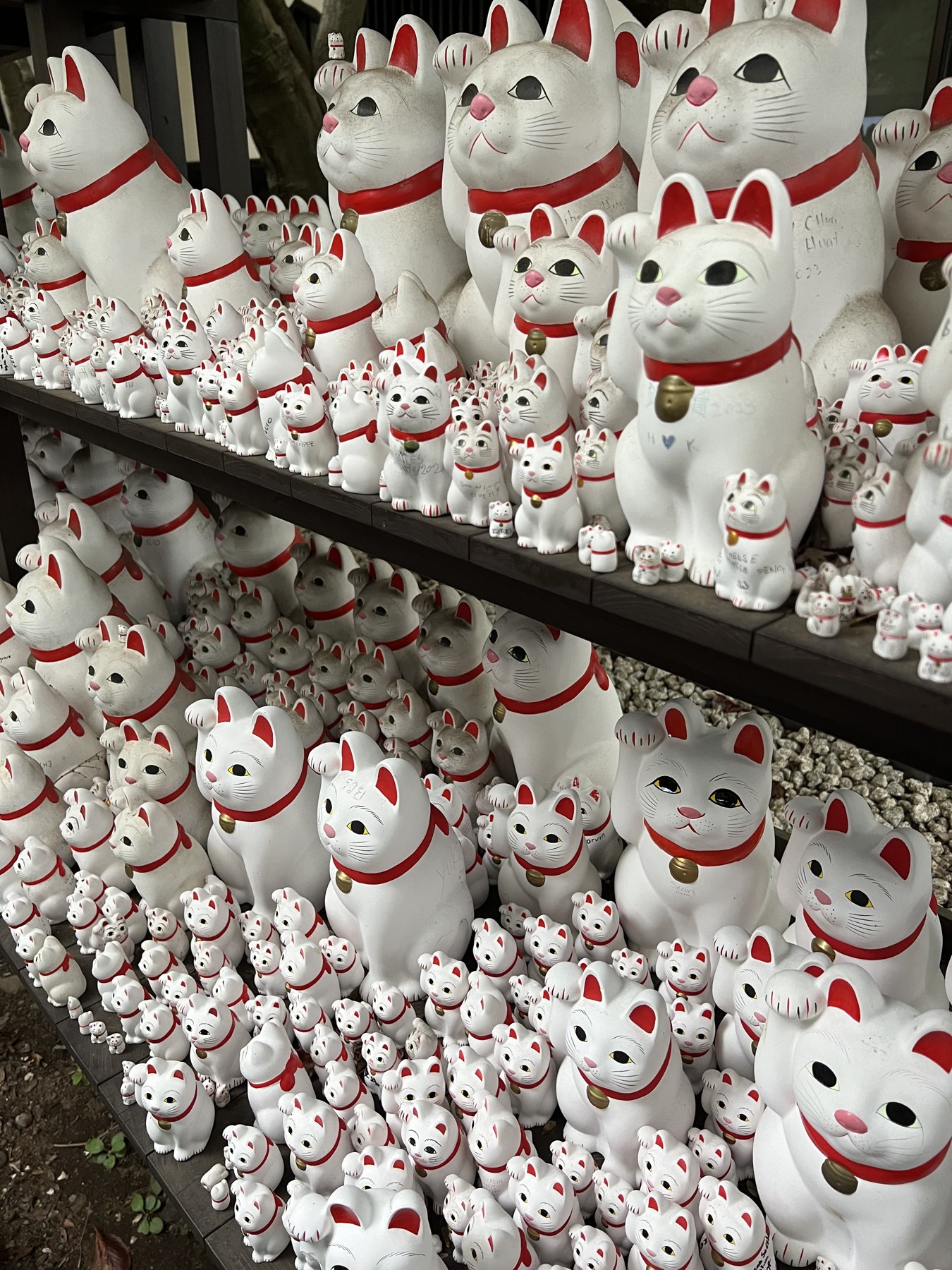
There's no official count, but it's easily in the thousands, and they're still arriving. Most are the same simple shape: white, one paw raised, a plain red collar. Walking past shelf after shelf of them — some old and weathered, some clearly just left that week — is a strange, quietly moving thing to see in person.
What the raised paw actually means
The cat at Gotokuji is always shown with its left paw raised, which is said to invite people and good relationships — fitting, since the whole legend is about a cat inviting someone in. Shops more often display a cat with the right paw raised instead, which is said to invite money and business. Some figurines raise both.
Color carries meaning too, at least by the common retail explanation you'll hear in shops: white for happiness, black for warding off bad luck, green for safety and passing exams. Gotokuji's own cats are almost all plain white — the original color, before the shops got creative.
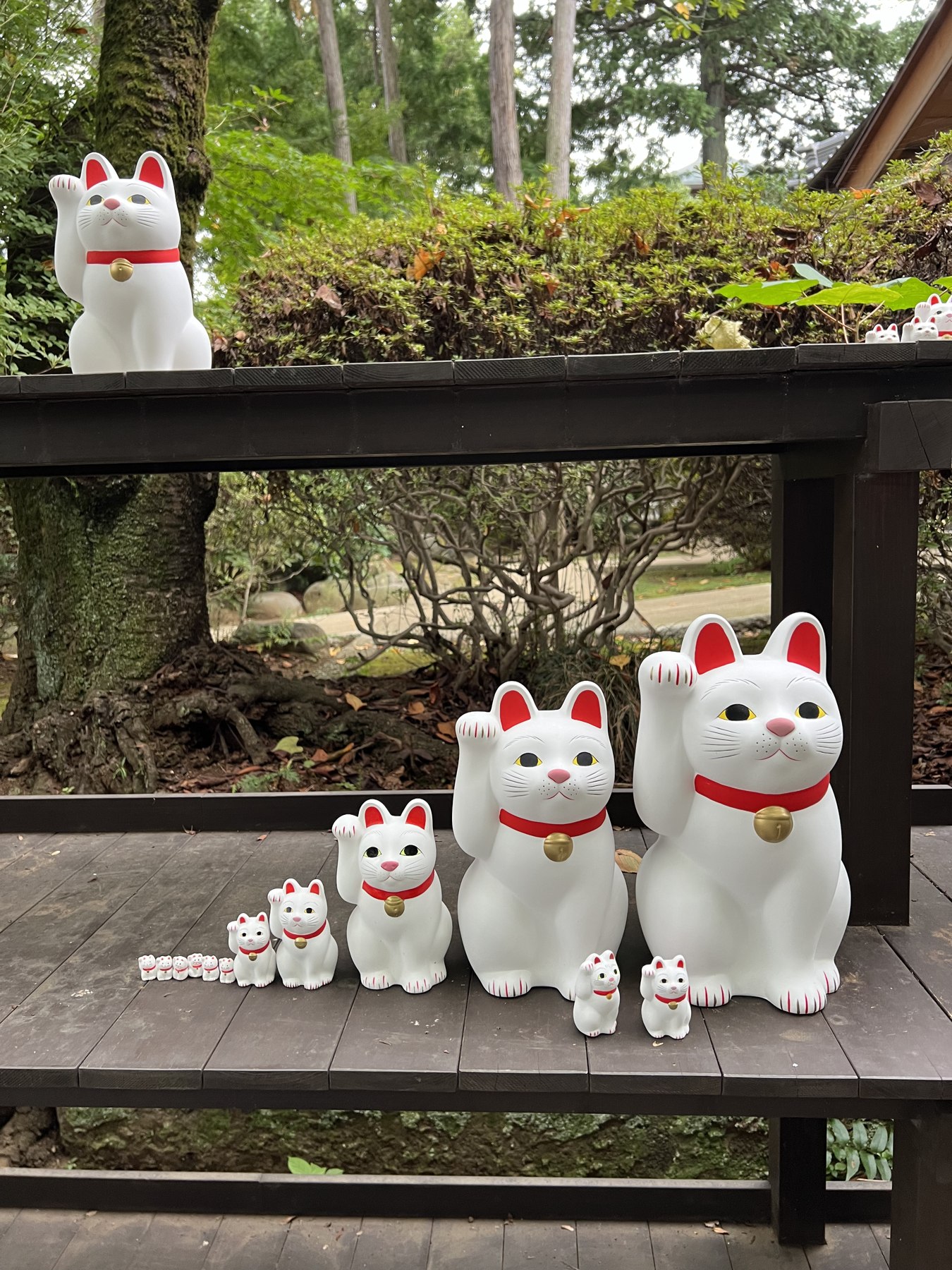
Today the maneki-neko has nothing to do with Buddhism specifically — it sits outside ramen shops, in nail salons, on the counter of a corner store, as often as it sits in a temple. That's part of what struck me about Gotokuji: the figurine everyone knows turns out to have a very specific, very local origin story, in a temple most visitors to Tokyo never hear about.
A lucky cat for home
Gotokuji actually sells the same plain white cat you see on the shelves, priced by size from about ¥500 to ¥10,000 at the temple office. Most visitors buy one there and leave it behind as a thank-you offering — which is exactly why the shelves keep filling up. Nothing stops you from taking one home instead, but if you'd rather order one without a trip to Tokyo, these are genuine, well-reviewed pieces from named Japanese kilns and brands, not generic imports.
Tokoname Ware Lucky Cat, White, Right Paw, 6.3 in
Picked for the closest match to a real, plain white cat
Made in Tokoname, one of Japan's oldest pottery towns, known for this exact style of lucky cat. Plain white porcelain, calm expression, right paw raised (money and business luck, rather than Gotokuji's left-paw version). Well-reviewed by US buyers for years.
- Size: W11 × D10 × H16 cm
- Made in Japan
- I haven't tried this one.
Tokoname Ware Lucky Cat, White, Right Paw, 7.5 in
Picked for more presence on a shelf
Same Tokoname-ware cat, in the larger of its two common sizes. Good if you want it to actually be noticed rather than blend in.
- Size: 7.5 in tall
- Made in Japan
- I haven't tried this one.
YOSHINOYA KYUBEI Kimono Lucky Cat with Gold Coin
Picked for a dressier, gift-ready look
By YOSHINOYA KYUBEI, a good-luck-charm brand from KYUGETSU, a Japanese doll maker with over 190 years of history. This one wears a traditional chirimen crepe-fabric kimono and holds a gold coin for extra money luck.
- Size: about 6.5 × 8.5 × 10.5 cm (cat only)
- I haven't tried this one.
YOSHINOYA KYUBEI Lucky Cat Piggy Bank
Picked for something that also does a job
Same brand, a calico-pattern cat holding a gold lucky mallet, with a coin slot in the back of the head. A lucky cat and a piggy bank in one, which is a very practical way to justify buying a second one.
- Size: 11.5 × 11.5 × 12.5 cm (with cushion)
- I haven't tried this one.
A backdrop for your figurines
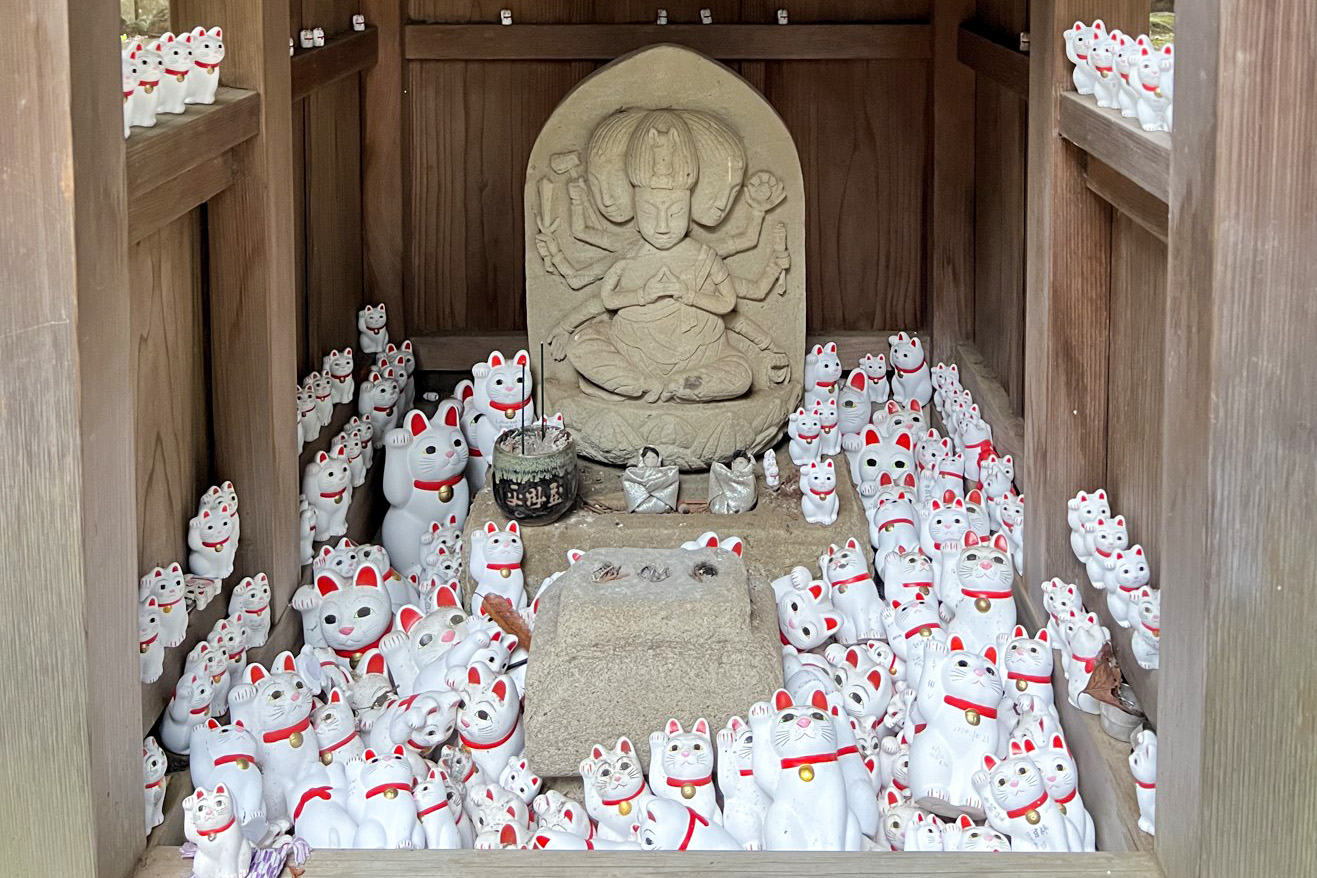
In Japan, it's common to set a small byobu folding screen behind an ornament like this — on a shelf, an entryway table, or a tokonoma alcove — rather than let the figurine sit alone against a bare wall. It gives even one small cat a sense of a proper display, the same way a shrine like Gotokuji surrounds its cats with wood and stone rather than an empty shelf.
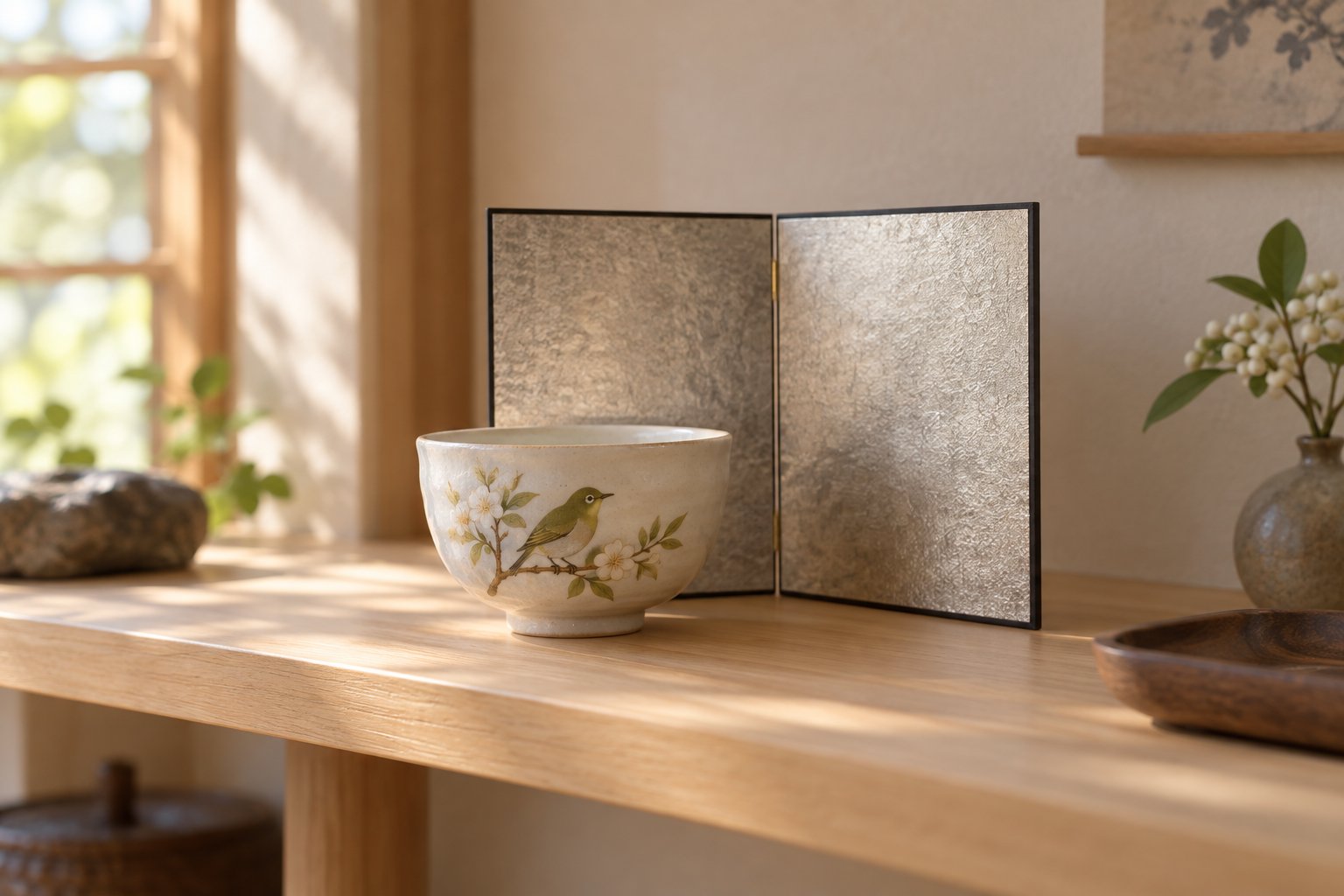
Small Gold Folding Screen, Cherry Blossom
Picked for a shelf display
By Yamasita Craft, a Japanese maker. Gold catches more light than a plain backdrop, so it tends to stand out rather than recede behind the figurine in front of it.
- Size: small (exact dimensions not stated by the shop)
- Made in Japan
- I haven't tried this one.
If you go
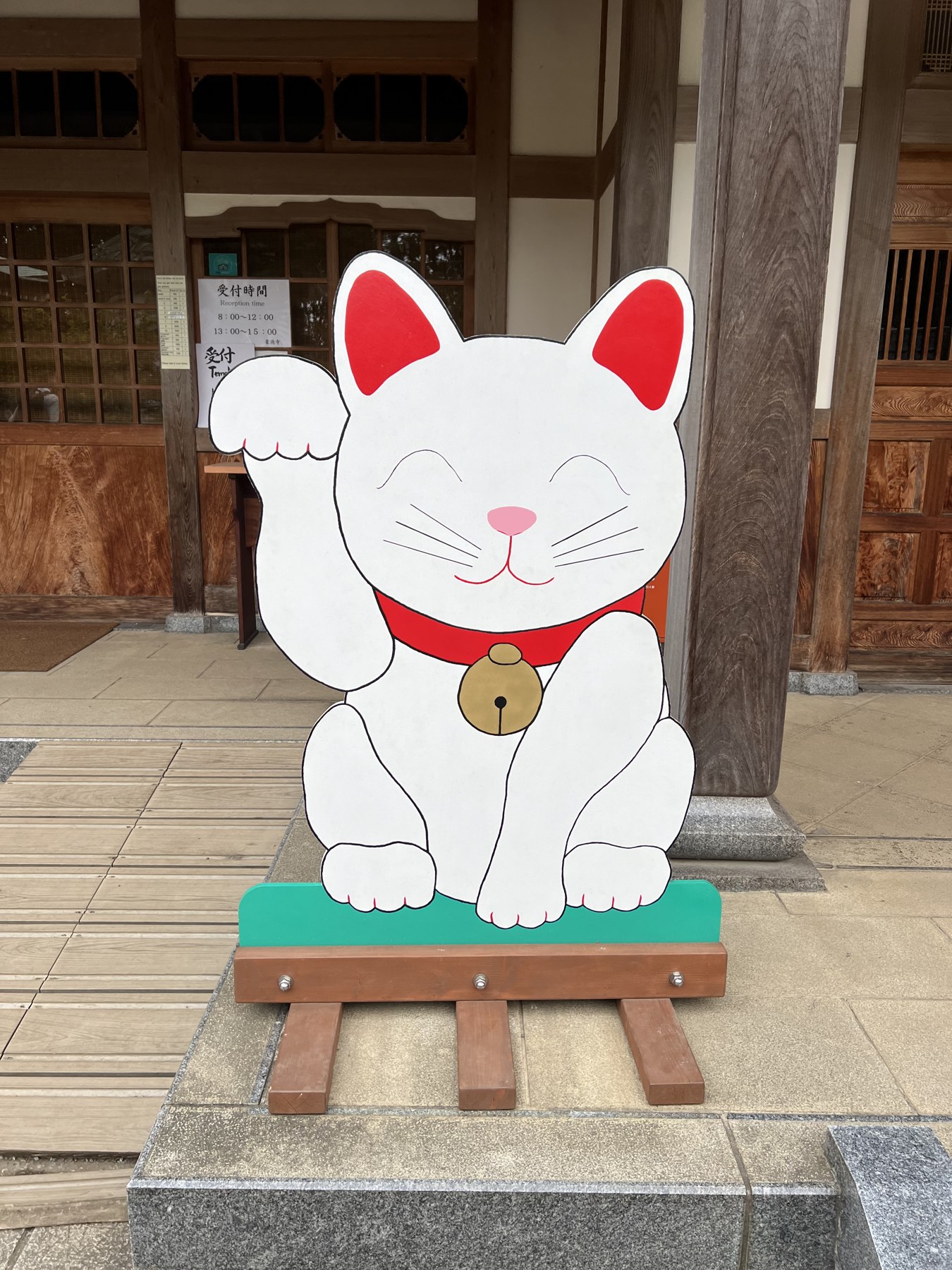
It's a real temple, not a gift shop. People still worship and hold services here. Keep your voice down near the main hall, and ask before taking close-up photos of anyone praying.
Cashless is fine, cash is not required. The temple office sells the ceramic cats directly, from about ¥500 for a small one up to ¥10,000 for a large one, along with amulets and goshuincho. Payment is by ticket machine, and it's cashless-only — PayPay and other e-payment apps work, but bring your phone rather than your wallet.
Pair it with a walk. The surrounding Gotokuji and Miyanosaka neighborhood is quiet and residential, a good contrast if you're coming from somewhere busier that day.